
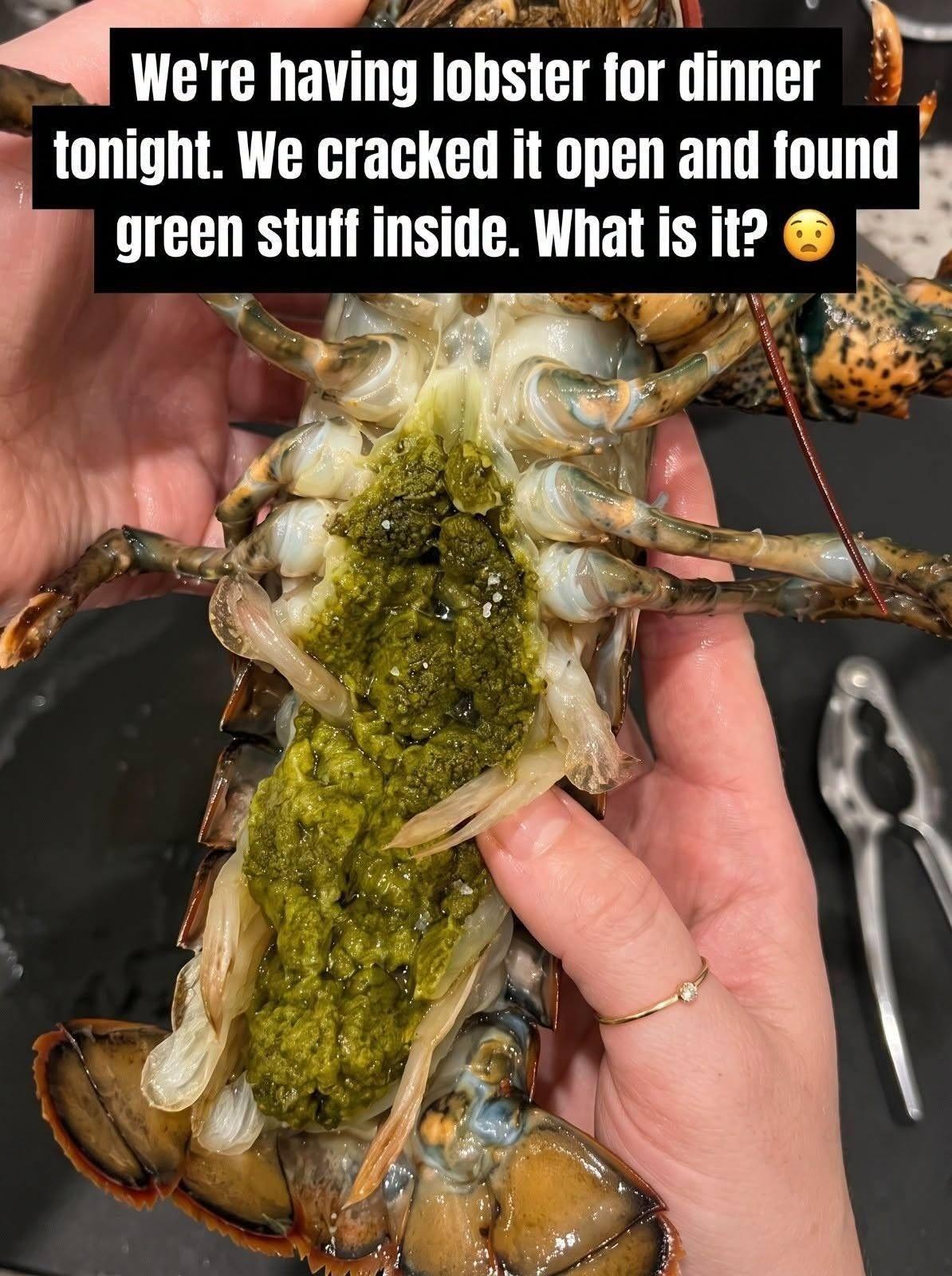
The Mystery of Lobster’s Green Goodies
If you’ve ever cracked open a beautifully cooked lobster and spotted that strange green, creamy, sometimes slightly grainy substance tucked inside, you may have paused for a second and thought, Wait… what IS that?!
You’re definitely not alone!
That mysterious green material has sparked plenty of dinner-table conversations, curious guesses, and more than a few nervous reactions. It can look unusual enough to make you wonder whether the lobster is safe to eat—or whether you’ve accidentally discovered something you weren’t supposed to.The good news? Lobster’s green “goodies” are aperfectly natural part of the animal. And they have an interesting biological story behind them.
So grab your seafood crackers, because we’re about to solve one of the ocean’s tastiest little mysteries!
What Is the Green Stuff Inside a Lobster?
That green substance is commonly called tomalley.
Tomalley is essentially the lobster’s digestive gland, known scientifically as the hepatopancreas. It performs several important functions, including helping with digestion and nutrient storage.
Think of it as a combination of organs that helps the lobster process the food it eats.
And yes,its color can be surprisingly intense!
Depending on the lobster, its diet, maturity, and other factors, tomalley may appear:
Green
Olive green
Yellow-green
Brownish green
Creamy or slightly gray-green
Its texture can also vary. Sometimes it is smooth and buttery, while other times it may be softer or grainier.
That variation is completely normal.
Why Does Lobster Tomalley Look Green?
This is where things get especially interesting.
The color isn’t simply because the lobster has a preference for green food. Tomalley contains pigments and digestive materials associated with the lobster’sdiet and digestive processes.
Lobsters are scavengers and opportunistic feeders. Their diets can include fish, mollusks, crustaceans, worms, and other marine organisms.
As food is digested and processed, pigments and other compounds contribute to the distinctive appearance of the tomalley.
So when you open a lobster and see that bright green center, you’re looking at a little snapshot of the animal’s digestive system.
Nature really does have some unusual designs!
Is Tomalley the Same Thing as Lobster Roe?
No—and this is another common source of confusion.
Tomalley and lobster roeare different things.
Tomalley is associated with the lobster’s digestive system, while roe refers to eggs.
Female lobsters carrying eggs may have orange or reddish roe, sometimes called coral because of its vivid color.
A Quick Lobster Anatomy Lesson
When you’re eating a whole lobster, you may encounter several different parts:
Claw and tail meat: The familiar white meat most people are after.
Tomalley: The green digestive gland.
Roe: Eggs found in mature female lobsters.
Shell: The hard external covering that protects the lobster.
Gills:Respiratory structures inside the body.
It’s basically a tiny marine biology lesson sitting right there on your dinner plate!
What Does Lobster Tomalley Taste Like?
Here’s where opinions can get wonderfully divided.
People who enjoy tomalley often describe it as rich, savory, briny, buttery, and intensely lobster-like.
Because it contains concentrated flavors from the lobster’s digestive system, its taste can be considerably stronger than the delicate meat in the claws or tail.
Some seafood lovers scoop it up immediately.
Others see that green color and say, Absolutely not!
And honestly,Respiratory structures inside the body.
It’s basically a tiny marine biology lesson sitting right there on your dinner plate!
What Does Lobster Tomalley Taste Like?
Here’s where opinions can get wonderfully divided.
People who enjoy tomalley often describe it as rich, savory, briny, buttery, and intensely lobster-like.
Because it contains concentrated flavors from the lobster’s digestive system, its taste can be considerably stronger than the delicate meat in the claws or tail.
Some seafood lovers scoop it up immediately.
Others see that green color and say, Absolutely not!
And honestly,that’s okay. Seafood preferences are personal.
If you enjoy rich shellfish flavors, tomalley can add a luxurious depth to lobster dishes. It can be mixed into sauces, spread onto bread, stirred into butter, or simply tasted on its own.
Why Do Some People Consider Tomalley a Delicacy?
Historically, many seafood traditions have valued parts of animals that might be discarded elsewhere.
Tomalley has been appreciated by some lobster lovers because of its rich flavor and creamy texture.
It’s particularly appealing to people who enjoy getting the most out of awhole lobster rather than eating only the obvious meat.
There’s also something wonderfully old-fashioned about sitting around a table with a whole lobster, cracking the shell, and discovering all those little edible treasures inside.
Nothing wasted. Everything appreciated.
Is Lobster Tomalley Safe to Eat?
This is the important part.
Although tomalley has traditionally been eaten, there are safety concerns that make it different from ordinary lobster meat.
The lobster’s hepatopancreas can accumulate environmental contaminants, including certain marine biotoxins and pollutants. Because of this, public-health authorities have sometimes advised people toavoid eating tomalley, particularly when harmful algal blooms or other contamination events affect lobster-growing or harvesting areas.
The concern isn’t that green tomalley is inherently poisonous. Rather, the organ can concentrate contaminants that may be present in the marine environment.
For that reason, it’s wise to check local seafood advisories and follow current guidance for the specific area where the lobster was harvested.
What About Lobster Meat?
Lobster meat is generally the part people commonly eat and is subject to seafood safety regulations and handling recommendations.
Still, proper cooking andrefrigeration matter enormously.
Fresh lobster should be kept cold, handled hygienically, and cooked thoroughly.
When in doubt about a lobster from an unfamiliar source, the safest choice is to follow the advice of the relevant local health or fisheries authority.
Why Do Lobsters Have Tomalley in the First Place?
Because lobsters need digestive organs just like other animals do!
The hepatopancreas plays several roles in digestion and metabolism. It produces digestive enzymes, helps absorb nutrients, and participates in storing energy.
In other words, although it looks strange to us, therefrigeration matter enormously.
Fresh lobster should be kept cold, handled hygienically, and cooked thoroughly.
When in doubt about a lobster from an unfamiliar source, the safest choice is to follow the advice of the relevant local health or fisheries authority.
Why Do Lobsters Have Tomalley in the First Place?
Because lobsters need digestive organs just like other animals do!
The hepatopancreas plays several roles in digestion and metabolism. It produces digestive enzymes, helps absorb nutrients, and participates in storing energy.
In other words, although it looks strange to us, thegreen material is actually performing important biological work.
The lobster doesn’t think it’s mysterious.
It’s just lunch!
Does Every Lobster Have Green Tomalley?
Lobsters have a hepatopancreas, but the material you see inside them won’t necessarily look identical every time.
Its color and consistency can change depending on factors such as:
The lobster’s diet
Its physiological condition
Seasonal factors
The animal’s reproductive state
What it has recently eaten
Natural variation between individual lobsters
So one lobster might contain a beautifully green, creamy tomalley whileanother looks considerably darker or less vibrant.
Why Is Lobster Sometimes Orange Inside?
If you’re cracking open a female lobster and discover bright orange material, don’t immediately assume something has gone wrong.
You may be looking at roe, or lobster eggs.
Roe can range from orange to reddish-orange and is completely different from tomalley.
This is one reason whole lobster can look so surprising compared with a neatly prepared lobster tail. Once the shell comes off, you’re seeing much more of the animal’s anatomy.
Can You Cook With Lobster Tomalley?Traditionally, some cooks have used tomalley to add intense lobster flavor to sauces, soups, spreads, and compound butter.
However, because of the potential for contaminant accumulation, using tomalley as an ingredient isn’t something I’d recommend without checking current local seafood-safety guidance first.
If your goal is simply to make a sauce taste more lobster-forward, there are plenty of safer ways to do it.
Try:
Lobster stock
Shell-infused butter
Seafood stock
Lobster reduction
Cooked lobster meat
A small amount of concentrated seafood broth
You canstill get that incredible ocean flavor without relying on the green stuff.
How to Tell if Lobster Has Gone Bad
The green tomalley isn’t, by itself, a sign that a lobster has spoiled.
Instead, pay attention to the lobster’s overall condition.
Warning Signs
Avoid lobster that has:
A strong ammonia-like odor
Slimy or unusually deteriorated meat
Strange discoloration of the meat
Been stored improperly
Been left at unsafe temperatures
An uncertain harvesting or storage history
Fresh lobster should smell pleasantly marine and briny—not sharplychemical or rotten.
And here’s a tip worth remembering: your nose is often one of your best kitchen tools.
If something smells seriously wrong, don’t gamble on it.
The Difference Between Lobster Meat and Lobster Organs
One reason the green material surprises people is that restaurant lobster is usually served in a very tidy form.
You get a tail.
You get a claw.
Maybe a little melted butter.
Everything looks familiar.
But a whole lobster is a completely different experience.
You’re encountering the animal as a whole, which means youmay see digestive organs, reproductive material, connective tissue, and other parts that aren’t normally presented on a dinner plate.
It can look strange—but that’s simply because you’re seeing the anatomy that normally stays hidden inside the shell.
Frequently Asked Questions
Is the green stuff inside lobster poop?
Not exactly.
Tomalley is a digestive gland, not simply fecal material. It is part of the lobster’s digestive system and performs functions related to digestion and nutrient processing.
Can you eat lobster tomalley?
It has traditionally been eaten, but there are legitimate food-safetyconcerns because the hepatopancreas can accumulate contaminants. Check current local seafood advisories before consuming it.
Why is lobster tomalley green?
Its greenish color comes from pigments and digestive materials associated with the lobster’s diet and physiology.
Is lobster tomalley the brain?
No.
The green material is not the lobster’s brain. It is the hepatopancreas, a digestive organ.
Is orange lobster stuff the same as tomalley?
Usually not. Bright orange material in a female lobster may be roe, meaning eggs.
Does tomalley taste good?
That’s entirely subjective! Fans describe it asrich, savory, buttery, and intensely lobster-flavored, while others find its flavor or texture unappealing.
Why does one lobster have more green stuff than another?
The amount and appearance can vary naturally between lobsters because of differences in size, diet, physiology, and reproductive condition.
Should I remove tomalley before eating lobster?
If you prefer not to eat it—or if local seafood-safety guidance recommends avoiding it—simply remove it and enjoy the lobster meat instead.
General Lobster Information
What is it?
A marine crustacean prized for its sweet, delicate meat.
What is tomalley?The lobster’s hepatopancreas, an organ involved in digestion and nutrient storage.
Why is it green?
Natural pigments and digestive contents give it its characteristic color.
Is it the same as roe?
No. Roe consists of eggs, while tomalley is a digestive organ.
Should everyone eat it?
No. Because tomalley can concentrate contaminants, checking current local seafood advisories is the safest approach.
The Bottom Line: That Green Lobster Mystery Isn’t So Mysterious Anymore!
So the next time you crack open a lobster and discover a little pool of green inside, youdon’t have to wonder whether you’ve found some strange hidden ingredient.
You’ve found tomalley—the lobster’s hepatopancreas.
It’s one of those fascinating examples of how food can teach us a little biology while we’re enjoying dinner. The color may be surprising, the texture may be unusual, and opinions about eating it may vary wildly.
Personally, I think that’s part of the fun of eating whole seafood. You never quite know what you’ll discover!
And remember: while tomalley has a long culinary history, current seafood-safety advisories should guide whether you consume it,especially because this organ can accumulate environmental contaminants.
Have you ever opened a lobster and wondered about the green stuff inside? Leave a comment and tell me what you thought it was the first time you saw it! And if you learned something new, share this article on Pinterest so another curious seafood lover can solve the lobster mystery, too.
More Seafood Mysteries to Explore
If you’re fascinated by the unusual things we discover in seafood, you might also enjoy learning about:
Why shrimp sometimes have a dark linealong their backs
What the orange material inside a crab means
Why oysters can taste different throughout the year
The difference between lobster, crayfish, and langoustine
Why some seafood tastes sweeter than others
How shellfish get their distinctive flavors
Because honestly, the ocean is full of culinary mysteries—and I have a feeling this won’t be the last one we crack open!



Comments